


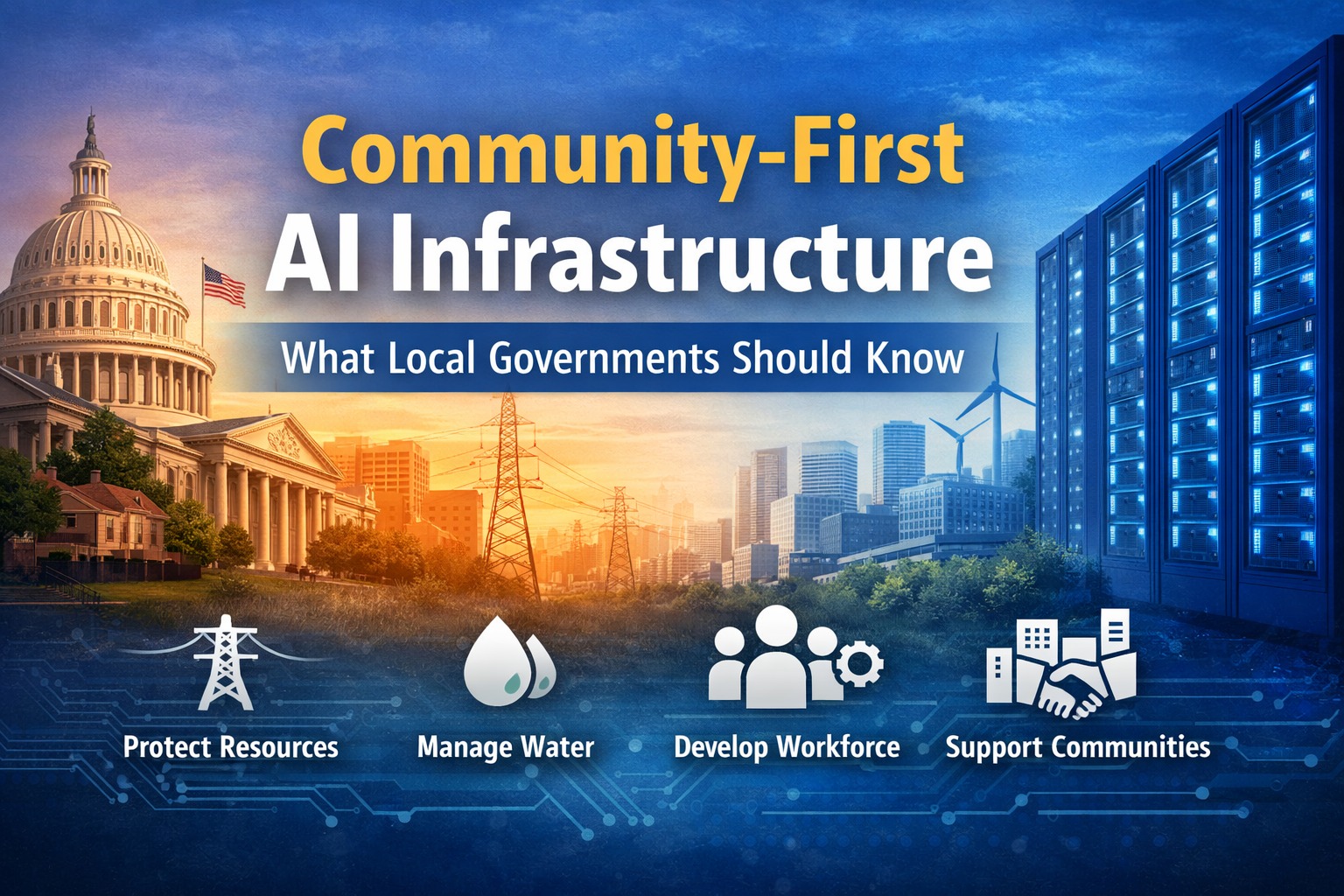
Community-First AI Infrastructure- What Local Governments Should Know
Artificial intelligence (AI) is no longer just software – it’s physical infrastructure. Behind every AI service are
large datacenters that require electricity, water, land, and long-term planning. For local governments, this
creates both opportunity and responsibility.
On Jan 13, 2026, Microsoft introduced its Community-First AI Infrastructure initiative – a framework
designed to help communities benefit from AI growth while protecting local resources and public services.
Why Community-First AI Infrastructure Approach Matters
Cities, counties, and regional agencies are increasingly asked to approve or support AI datacenter projects.
These decisions affect:
- Power grid capacity
- Water availability
- Zoning and permitting
- Workforce development
- Long-term tax revenue
A community-first approach helps public agencies balance innovation with sustainability and public trust.
Below is the 5-Point Plan to Partner with Local Communities Across the United States:
1. Power Grid Stability – Without Higher Resident Costs
One of the biggest concerns with AI infrastructure is electricity demand. Microsoft commits to paying the full
cost of power required for its datacenters and investing in grid upgrades when needed – helping ensure
residents don’t see increased utility rates.
For local governments, this means:
- Reduced risk to residential ratepayers
- Early coordination with utilities
- Privately funded infrastructure improvements
2. Responsible Water Stewardship
Water is a shared public resource, and datacenter cooling can place pressure on local systems. Microsoft’s
initiative focuses on:
- Reducing overall water use
- Using advanced, closed-loop cooling systems
- Replenishing more water than facilities consume
This aligns closely with municipal water sustainability goals.
3. Workforce and Economic Development
AI infrastructure creates jobs but only if residents can access them. Microsoft plans to partner with:
- Community colleges
- Workforce development boards
- Trade and apprenticeship programs
The goal is to build local talent pipelines for both construction and long-term operations roles.
4. Full Property Tax Contributions
Unlike many large developments that seek tax abatements, Microsoft has committed to paying full local
property taxes on AI datacenters.
These revenues help fund:
- Schools
- Public safety
- Infrastructure
- Libraries and community services
For local agencies, this provides predictable, long-term fiscal benefits.
5. Community AI and Digital Inclusion
Beyond infrastructure, Microsoft plans to support AI education through partnerships with libraries, nonprofits,
and community organizations helping residents and public employees build AI literacy.
Key Takeaways:
AI infrastructure is coming to communities across the country. The real question for local governments is how
it’s built and who benefits.
Microsoft’s Community-First AI Infrastructure initiative offers a framework for:
- Protecting public resources
- Supporting local economies
- Strengthening workforce readiness
- Maintaining public trust
When done right, AI infrastructure can become a long-term community asset, not just a facility.